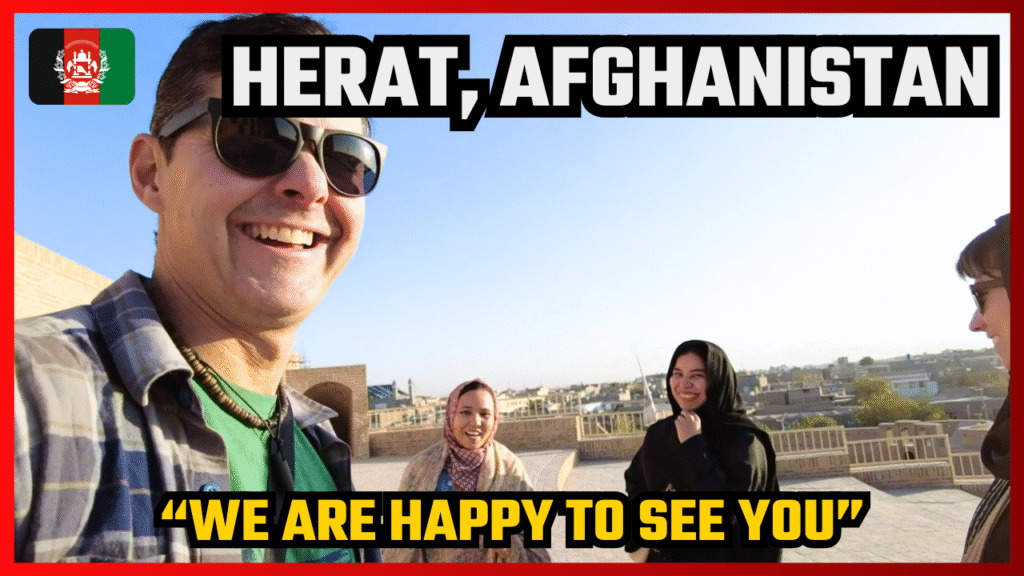
Traveling to Afghanistan is, without a doubt, one of the greatest challenges I have ever faced in my life as a traveler. When I decided to explore this nation—historically known as the “Graveyard of Empires”—I knew it wouldn’t be an ordinary journey. After navigating through Kabul and Bamiyan, my next destination was Herat, a city in the northwest, sitting right on the border with Iran. Many travelers and locals describe it as the most liberal and progressive city in Afghanistan. But what does “liberal” actually mean in a country under Taliban rule?
I’ve prepared this complete guide based on my experience traveling to Herat without a guide to help you understand the current reality of this fascinating destination. Or watch my full video about Herat, in Afghanistan:
The Ariana Afghan Airlines Flight: A Journey Back in Time
My trip to Herat began at the Kabul airport. Flying with Ariana Afghan Airlines is an anthropological experience in itself. The plane, an old Boeing 737-400, still bore the flag of the previous government—a curious detail given the current political climate. One of the most surreal moments was the bus ride from the terminal to the aircraft: the driver drove for literally 10 meters. It was a seven-second commute!
Flying over Afghanistan allows you to see a rugged, barren geography that explains so much about the resilience of its people throughout the centuries. Upon landing in Herat, the first mission was finding a taxi. In Afghanistan, negotiation is part of the culture. The driver initially asked for 500 Afghanis, but we settled on 400 (about 5 USD). While the difference is small for us, negotiating is vital to respect the local economy without overpaying as a tourist, while remaining conscious of their financial reality.
Where to Stay in Herat: Reality Beyond Booking.com
If you are used to booking everything via Booking.com or Hostelworld, Herat will give you a reality check. Online listings are almost non-existent. We found only one hotel listed for about $50, which felt overpriced for the local standard. We ended up following a local recommendation to a hotel that cost $28 per night.
Do not expect luxury. The room wasn’t the cleanest in the world, but for those traveling independently through unstable regions, comfort takes a backseat to location and safety. In Kabul, we had an incredible experience at a backpacker hostel, but in Herat, the infrastructure is still very much geared toward locals or NGO workers.
Exploring the Citadel of Herat (Qala Iktyaruddin)
The historical crown jewel of the city is the Citadel of Herat. It was originally built by Alexander the Great in 330 BC during his invasion of the region. It is breathtaking to think that those walls have seen empires rise and fall for over two millennia. The structure has been destroyed and rebuilt numerous times. Interestingly, the most recent renovation took place between 2006 and 2011, with support from the international coalition and Japan.
Walking along the citadel’s towers, the view of the city is stunning, but the political presence is constant. At the top of the highest tower, the white Taliban flag flutters, marking the newest chapter of Afghan history. During the visit, we heard grim stories that, in times past, severe punishments were carried out from those very walls for those who committed crimes.
Local Interactions: Afghan People and Hospitality
One of the things that struck me most in Herat was the reception from the people. Contrary to the image often portrayed by the media, Afghans are extremely warm. We had the chance to talk to locals who live in Iran and returned to visit family. The language spoken here is Dari, which is virtually identical to Iranian Farsi, making communication between the two sides of the border much easier.
Many people stopped us on the street just to say, “Welcome to my country.” They are genuinely happy to see tourists, as it brings a sense of normalcy and hope that the world hasn’t totally forgotten them. Of course, talking about politics requires caution, but their gratitude for our presence was evident.
Being a Woman in Afghanistan: Challenges and Precautions
Traveling with Nick brought an essential perspective on the situation for women. In Herat, the “moral police”—men dressed in white who patrol the city—monitor the correct use of the hijab and social behavior. Nick had to be constantly vigilant to ensure her neck or hair wasn’t showing.
Wearing the hijab is not just a matter of cultural respect; it is a matter of personal safety. There were moments of tension, such as when we noticed heavier stares as dusk fell. On one occasion, Nick felt crowded by a group of young men in a shop, which led us to decide to head back to the hotel and eat dinner there. Freedom in Herat exists in comparison to cities like Kandahar (the Taliban’s heartland), but it is still a guarded and highly restricted freedom for women.
The Great Bazaar of Herat and Daily Life
The Herat Bazaar is a labyrinth of color and tradition. Unlike Kabul, which has a more chaotic and modern feel, Herat’s bazaar maintains mud-brick constructions that look like something out of a period film. We saw mountains of cotton, giant Afghan breads coming out of ovens, and piles of juicy pomegranates.
A technological curiosity: the use of solar panels is everywhere. Since many cities suffer from unstable electrical infrastructure, solar power from China has become the savior for lighting homes and small businesses. It is the meeting point of Biblical-era Afghanistan and modern technology.
Is Independent Travel to Afghanistan Worth It?
Many people ask if traveling here is “supporting the regime.” My view is practical: most of the money we spend goes directly to the people. The taxi driver, the restaurant owner, and the small merchant depend on this flow to survive. Only a small travel permit fee goes into the government’s coffers.
Herat proved to be a city of contrasts. At the same time that you feel the ancient hospitality, there is the discomfort of constant surveillance and the deprivation of liberty for half the population. Traveling to Afghanistan without a guide requires nerves of steel, deep respect for local laws, and a genuine desire to understand the geopolitical complexity of the region.
If you are looking for a trip that changes your perception of the world, Herat is the place. But be prepared: it is not just a tourist outing; it is a deep dive into human resilience.