If you’re planning a trip to Spain and want to escape the obvious (Madrid, Barcelona, and the Mediterranean beaches), I have one word for you: Lanzarote. Located in the Canary Islands archipelago, right off the African coast, Lanzarote is undoubtedly one of the most surreal places I have ever set foot on.
Imagine a landscape where the earth is pitch black, dormant volcanoes dominate the horizon, and white houses contrast against a deep blue sea. Traveling here isn’t just a “trip to the beach”; it’s like boarding a spacecraft and landing on Mars—but with the added bonus of high-quality wine and Spanish tapas at your disposal.
In this article, I’ll share my Lanzarote itinerary, tips on how to save on car rentals, the main attractions, and even a few pinches of geopolitics to help you understand the strategic importance of these islands.
Or watch my full experience on Youtube:
Getting Around: The Golden Rule
The first pro-tip for anyone visiting the Canary Islands: rent a car. While the local bus system (the famous guaguas) works, the freedom to drive through the island’s scenic roads is priceless.
I took the local bus to the airport just to pick up a rental, as I found that airport rental prices tend to be much cheaper than in the city’s tourist zones. I got lucky and ended up with an upgrade to a Skoda SUV—a Czech brand very common in Europe (controlled by Volkswagen) that is perfect for these volcanic roads.
What to Do in Lanzarote: Main Attractions
1. Los Volcanes Natural Park and Caldera de los Cuervos
Our first stop was the Sea of Lava. Walking here is a unique sensory experience. The ground is basically composed of black volcanic rocks and ash. We headed to the Caldera de los Cuervos, a dormant volcano where you can literally walk along the edge of the crater.
The vegetation is scarce, giving it that “otherworldly” vibe. It is vastly different from anything we see in Brazil. If you enjoy easy trails and breathtaking views, this place is a must.
2. Timanfaya National Park
This is the island’s number one attraction. Timanfaya National Park is where volcanic activity is most visible. There are geothermal demonstrations where they pour water into holes in the ground, and it shoots back up as steam, just like a geyser.
Traveler’s Tip: Entrance costs around €20 and includes a bus tour through the park’s most restricted areas. However, if you’re on a tight budget or plan to visit other volcanoes (like Teide in Tenerife), you can choose to simply drive along the surrounding roads, which already offer spectacular views for free.
3. The Green Lagoon (El Golfo) and Los Hervideros
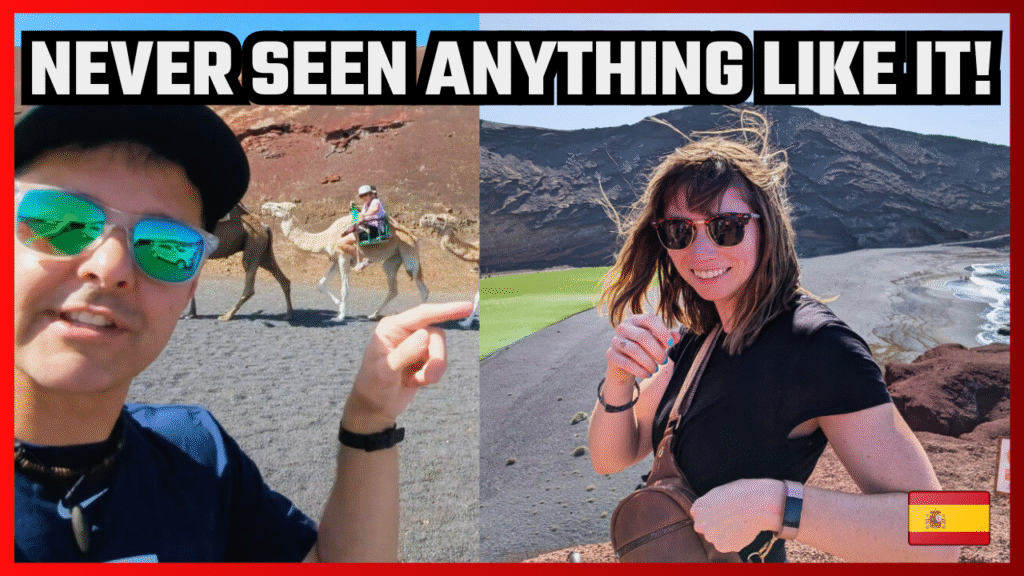
In the village of El Golfo, you’ll find the famous Green Lagoon (or Charco de los Clicos). It is a volcanic crater flooded by the sea where algae have given the water a vibrant emerald green color. The contrast of the green water with the black sand and the blue sea is mesmerizing.
Just 5 minutes away by car, stop at Los Hervideros. These are rock formations where the Atlantic waves hit with such force that the water appears to boil (hence the name). It is nature’s power in its rawest form.
4. Janubio Salt Pans
Lanzarote also has its industrial traditions. The Janubio Salt Pans are the largest in the Canaries and still produce salt traditionally. The geometry of the salt pans creates an incredible color gradient for photos. At the visitor center, you can even buy local salt with curious blends, like chocolate!
Geopolitical Insights and Borders
Those who follow my channel know I can’t resist a geopolitical analysis. Lanzarote is located just a few miles from Morocco and Mauritania. This raises some interesting points:
- Sovereignty: Although geographically in Africa, politically this is Spain. This means you are in the European Union, you use the Euro, and your European SIM card works normally.
- The Fishing Issue: There is a historical dispute over territorial waters. African countries often suffer from large European fishing vessels that take advantage of the lack of coast guards in these regions to overfish.
- Immigration: As a “gateway” to Europe, the Canary Islands constantly deal with the arrival of boats from the African coast. It is a complex issue that heavily influences local politics.
Unique Gastronomy: Wine from Volcanic Soil
Have you ever seen how grapes are grown in a place where it winds constantly and almost never rains? In Lanzarote, they created a brilliant system called La Geria.
They dig holes in the volcanic ash until they reach fertile soil and build small stone walls in a semicircle to protect the vines from the incessant wind. The result is a landscape that looks like a giant chessboard and a wine (especially the Malvasia) with a unique mineral flavor. Don’t leave the island without visiting a winery!
Arrecife: The Capital and Its Charms
Arrecife is the largest city in Lanzarote and is worth a walk along the promenade (Paseo Marítimo). Some unmissable spots:
- San Gabriel Castle: Accessible by a historical bridge (Puente de las Bolas).
- Playa del Reducto: An urban beach with calm waters.
- Charco de San Ginés: A small bay full of fishing boats, surrounded by bars and restaurants. It is the social heart of the city.
Practical Tips for Your Trip
Low-Cost Flights
The Canary Islands are very well served by low-cost carriers like Ryanair and EasyJet. If you’re already in mainland Europe, you can find tickets at unbelievable prices. Another popular option is cruises, which often offer excellent value if you consider that accommodation and food are already included.
Weather and What to Pack
Lanzarote is the “Island of Eternal Spring.” It’s sunny almost all year round, but the wind is constant. Always bring a windbreaker and, of course, plenty of sunscreen—the sun here is unforgiving, even when it feels cool.
Island Hopping
If you have time, use the Ferries (like Naviera Armas or Fred Olsen) to hop from one island to another. From Playa Blanca, in the south of Lanzarote, you can see the island of Fuerteventura and get there in just 30 minutes by boat.
Conclusion: Is Lanzarote Worth It?
Lanzarote is the kind of trip that expands your horizons. It’s a place where the architecture (heavily influenced by local artist César Manrique) respects nature, and every bend in the road reveals a new crater or a hidden beach.
If you’re looking for a destination that blends adventure, history, exotic beaches (like Famara for surfing), and a touch of mystery, Lanzarote should be at the top of your list.