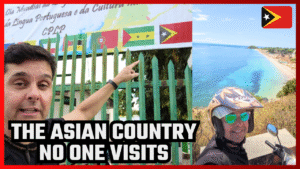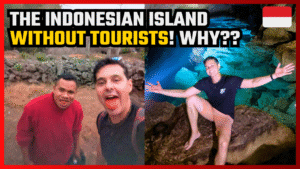
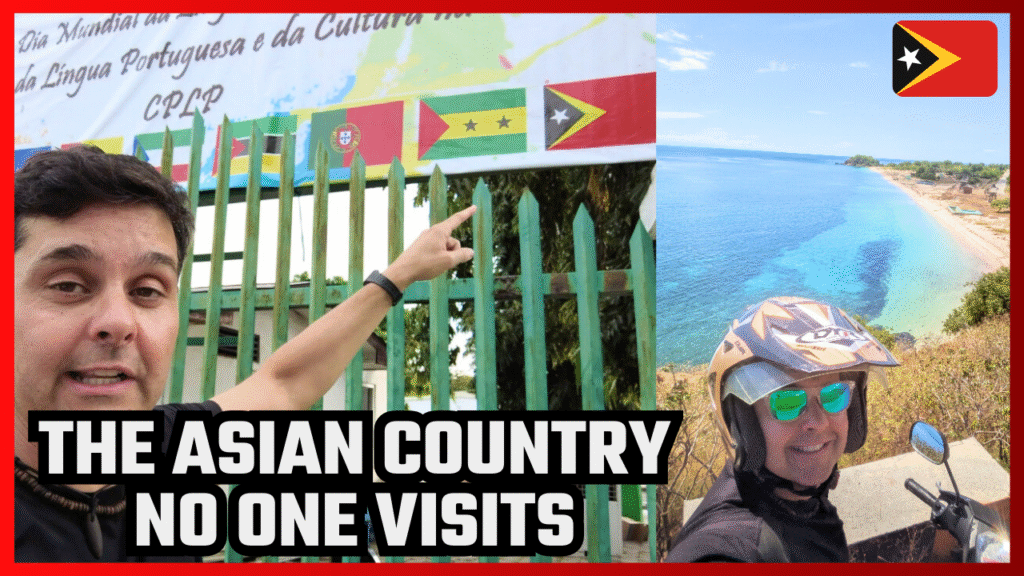
Have you ever felt the urge to escape the obvious and explore a destination that almost no one knows about? You know, that place where, when you tell your friends about it, they have to open Google Maps just to believe it exists? I just returned from one of the most impactful journeys of my life: East Timor (Timor-Leste).
Located in Southeast Asia, north of Australia and surrounded by Indonesia, East Timor is one of the youngest countries in the world—having gained definitive independence only in 2002. It carries a profound connection with Brazil and Portugal: we are language siblings. Yes, you can cross the planet and find people speaking Portuguese on a remote tropical island.
In this article, I’ll share my full experience exploring Dili and the country’s interior, diving into the history, geopolitics, and natural beauty of this well-guarded Asian secret. Get ready, because East Timor isn’t just a travel destination; it’s a lesson in resilience and culture.
Or watch my full video about Timor Leste:
Why should East Timor be on your radar?
Most backpackers traveling through Southeast Asia focus on the “golden axis”: Thailand, Vietnam, Cambodia, and Indonesia (Bali). But East Timor is the final frontier. There are almost no tourists. What you find here is pure authenticity.
The country is the second youngest in the world, trailing only South Sudan. Its history is marked by centuries of Portuguese colonization, followed by a brutal 24-year Indonesian occupation. This blend created a unique identity: a people who pray in Catholic churches, speak Tetum and Portuguese, yet live the vibrant rhythm of Southeast Asia.
Getting There: The Adventure Starts on the Way
Flying to Dili, the capital, can be a logistical and financial challenge. The most common routes come from Darwin (Australia), Singapore, or Denpasar (Bali). However, if you’re a traveler who likes to save money and watch the landscape change, the best option is to do what I did: fly to Kupang in West Timor (Indonesia) and cross the border by land.
The bus trip from Kupang to Dili is long and tiring, but it’s the cheapest way to enter the country. Furthermore, crossing the land border allows you to see the cultural and geographical transition between Indonesia and East Timor up close.
Dili: A Capital of Contrasts
Upon arriving in Dili, the first thing I noticed was the pace of the city. It’s small, seaside, and surrounded by imposing mountains. Dili doesn’t have Singapore’s skyscrapers or Jakarta’s chaos. It has a rustic charm.
Where to stay and how to get around
I stayed near Timor Plaza, the most modern part of the city. This is where you’ll find malls, expats working for NGOs or the oil industry, and an infrastructure closer to what we’re used to. However, to feel the real Dili, you need to step out of this “bubble.”
To get around, forget about Uber. The soul of public transport is the Microlete. These are colorful, numbered vans that run specific routes throughout the city. The cost? Just 25 US cents. It’s cramped, noisy, and plays a lot of local music, but it’s the most authentic experience you can have.
What to Do in Dili: An Unmissable Itinerary
1. Cristo Rei of Dili
This is the country’s postcard landmark. Located at the tip of a peninsula, the statue was a gift from Indonesia during the occupation period. To get there, you climb hundreds of steps on a trail that hugs the sea. The view from the top is breathtaking: on one side, Dili Bay; on the other, crystal-clear beaches and the sight of Atauro Island on the horizon.
2. Resistance Museum and Chega! Exhibition
You cannot visit East Timor without understanding its pain and its victory. The Resistance Museum details the 24 years of guerrilla struggle against the Indonesian occupation. Meanwhile, the Chega! Exhibition, housed in a former political prison (Comarca), shows the horrors of torture and the human rights violations that occurred there. It’s a heavy visit, but essential to respect the history of these people.
3. Santa Cruz Cemetery
This site was the scene of a massacre in 1991 which, filmed clandestinely, shocked the world and accelerated the independence process. Visiting the cemetery is a way to pay tribute to the nation’s martyrs.
Exploring the Interior: By Scooter to Baucau
Dili is just the gateway. To see the country’s raw beauty, I rented a scooter (about $10 USD per day) and hit the road toward Baucau, the second-largest city.
The road is an adventure in itself. You pass through green rice paddies, fishing villages, and mountains where the asphalt doesn’t always cooperate. Halfway there, stop in Manatuto to see buffaloes wallowing in the mud and grab a bite at the local markets.
In Baucau, the Portuguese colonial architecture is even more evident. The city has a nostalgic air, with old buildings and a natural water spring that serves as a public pool for residents.
Cost of Living and Currency: The Dollar Surprise
Here’s an important point: East Timor uses the US Dollar ($). This makes the country considerably more expensive than its Asian neighbors. A simple plate of food that would cost $1 in Thailand will cost between $3 and $5 here.
A fascinating curiosity is the coinage. Since the US doesn’t send coins there, the Timorese government issued its own centavo coins. They have the same value as the dollar but only circulate within the country. Be sure to spend them before you leave!
The Portuguese Language in Southeast Asia
Many people ask me: “Can you get by with just Portuguese?” The answer is: it depends.
- The elders: Many speak fluent Portuguese from living through the colonial era.
- The occupation generation: Generally speaks Indonesian and Tetum.
- The youth: Have been learning Portuguese in schools since 2002.
I had wonderful conversations in Portuguese with university students and local police officers. It’s moving to hear the Timorese accent, which blends the sweetness of a Portuguese lilt with local influences. However, in daily life, knowing a few words in Tetum (like “Obrigadu”) or a bit of English helps a lot.
Golden Tips for the Traveler in East Timor
- Internet: It is slow and expensive. Don’t expect to make video calls everywhere. Buy a local SIM card (Telkomcel or Timor Telecom) right at the airport or at Timor Plaza.
- Health: The healthcare system is precarious. Travel insurance is mandatory. Also, drink only bottled water.
- Diving: East Timor has some of the most pristine corals in the world. If you dive, Atauro Island is a marine biodiversity sanctuary you must visit.
- Cultural Respect: The country is deeply Catholic and conservative. Avoid very short clothing outside of the beaches and always ask permission before photographing people.
- Food: Try the Timorese coffee! It is among the best in the world and the country’s largest agricultural export.
Geopolitics: Oil and the Future
East Timor is a country rich in natural resources but still struggles to convert that wealth into well-being for its population. There is a historic dispute with Australia over the oil and gas fields in the sea (the so-called Timor Gap). The country wants to process the gas on land to generate jobs, while large corporations prefer processing it at sea or in Australia. Visiting the country also means understanding these tensions that shape the future of our sister nation.
Conclusion: Is It Worth It?
East Timor is not a destination for those seeking extreme comfort or luxury. It is a destination for the hardcore traveler, for those who want to learn, hear stories, and disconnect from the modern world. The beaches are beautiful, but what truly sticks in your memory is the dignity of the Timorese people.
If you want an experience that goes beyond pretty Instagram photos and enters the realm of personal transformation, East Timor is your place. Go now, before mass tourism discovers this paradise.