Have you ever wondered what happens when ancient history collides with the scars of modern warfare? Traveling to Afghanistan is undoubtedly one of the greatest challenges a traveler can face, but it is also one of the most transformative experiences. Today, I’m taking you with me to the heart of the Bamiyan Valley, a place that was once the center of global Buddhism and now holds deep marks of destruction and resilience.
Catch your breath (literally, as we are over 2,500 meters above sea level) and come discover what remains of the iconic Bamiyan Buddhas, destroyed by the Taliban in 2001, and what life is like in this region today. Or watch my full video about Bamiyan:
Bamiyan: The Cultural Heart of Afghanistan
Arriving in Bamiyan feels like stepping through a time portal. Located in central Afghanistan, the city is surrounded by towering mountains and fertile valleys. But don’t be fooled: the bucolic peace of sheep grazing hides a past of massacres and invasions.
Our first stop was the ancient Islamic city of Ghorghola, also known as the “City of Screams.” The name is grim, and so is the history: they say people screamed as they were massacred by Genghis Khan’s hordes. Today, the ruins are a UNESCO World Heritage site, offering a panoramic view that is breathtaking—both for its beauty and the thin air.
Travel Tip: Breathe and Hydrate
We are at 2,500 meters (approx. 8,200 feet) of altitude. If you plan to climb up to the citadel or explore the caves, take breaks. Fatigue hits fast, and hydration is key. Do not underestimate the mountain!
The Bamiyan Buddhas: What is Left?
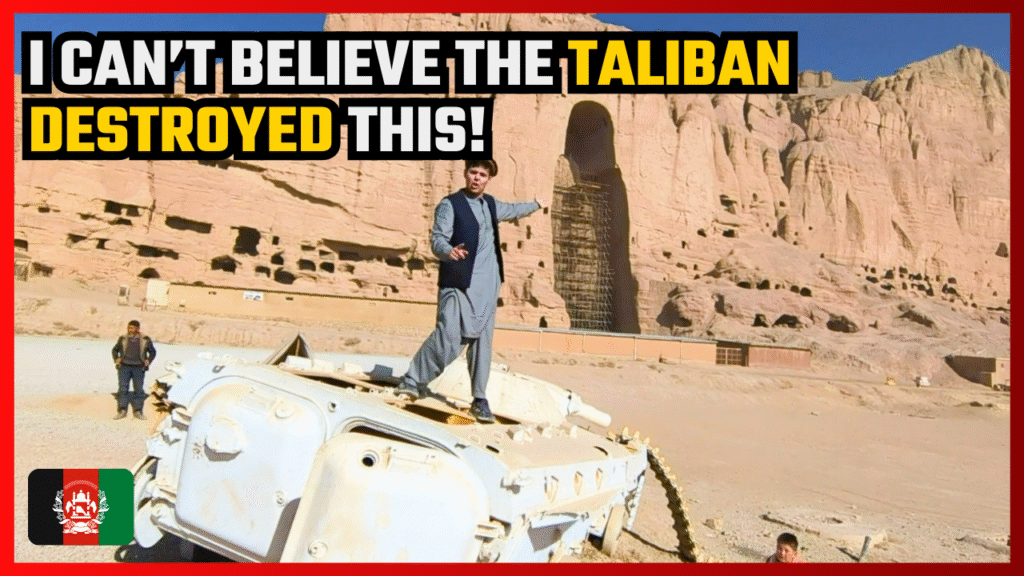
The sight of the empty niches where the world’s largest Buddha statues once stood is heartbreaking. Destroyed in March 2001 by the Taliban, just months before 9/11, what remains today are stone “skeletons” and a massive complex of caves.
The Male and Female Buddha
Many don’t know there were two main Buddhas: the larger one, often called the Male Buddha, and the smaller one, the Female. Walking at the foot of the statues, you see piles of rock that look like an impossible jigsaw puzzle. Before the current government retook power, there were efforts by UNESCO and countries like Japan to catalog these stones and perhaps reconstruct part of history. Today, reconstruction work has stalled, but basic conservation continues.
Exploring the Sacred Caves
The most impressive part isn’t just the empty niches, but the cave system surrounding them. Buddhist monks carved into the mountain from the inside, creating internal staircases to reach sacred chambers at the top. Entering these caves is like feeling the energy of centuries of meditation. Some still hold traces of paintings and decorations that have withstood time and vandalism.
The Taliban Presence: Tourism Under Watch
One of the questions I get asked most is: “How is the security?”. In Bamiyan, the Taliban’s presence is constant. They guard the historical sites and often end up being your silent “guides.” It’s a bitter irony: you pay your entrance fee to the same group that destroyed the monument.
However, the interaction is curiously calm. In Ghorghola, a Taliban guard even gave us a “thumbs up” when we showed we were filming and talking about the history of the place. You have to “play the game”: be respectful, follow the rules, and avoid direct political confrontations.
Geopolitics on the Road: Soviet and American Scars
Traveling through Afghanistan is a practical lesson in geopolitics. On the road between Bamiyan and Kabul, the landscape is dominated by abandoned Soviet armored hulls and remnants of international coalition military bases.
The Graveyard of Empires
Afghanistan earned this nickname for a reason. The British, the Soviets, and the Americans all tried to control this land and failed. We saw rusted Russian tanks next to American blast walls. The road to Kabul is riddled with potholes—not just from lack of maintenance, but from IEDs (Improvised Explosive Devices) used during the war. Every crater there tells the story of an ambush.
Tip for the Reader: Hire a Local Guide
While we try to be independent, having a guide like Azim (our guide in Kabul and Bamiyan) is essential. He has the contacts, knows where the dangers are, and helps us with travel permits, which are bureaucratic and complicated to obtain alone.
The Women’s Issue and the Hope for Freedom
Bamiyan is considered one of the most liberal and progressive provinces in the country. Here, you see far more women on the streets than in Kabul. We even saw groups of Afghan girls visiting the Buddhas, something our guide said he had never seen before.
There is a silent hope that, little by little, the country will open up again. Countries like Qatar and the UAE, which invest in Afghanistan, push for gradual modernization. After all, a social “pressure cooker” is never good for those in power.
Modernity in Kabul: The Shopping Mall Contrast
Upon returning to Kabul, the culture shock continues, but in reverse. We went to dinner at a shopping mall that could have been anywhere in the world. We ate pizza, drank Coke, and saw people shopping normally.
Showing this side is vital. Afghanistan is not just desert and war; it is a country with people who want to live, consume, and have a normal life. Coca-Cola in Afghanistan is bottled locally, proving that big corporations do business regardless of who is in power.
Is it Worth Visiting Afghanistan?
This is not a trip for everyone. It is for those with the stomach to see destruction, the patience for bureaucracy, and respect for local culture. But if you have the courage to step out of your comfort zone, you will find extremely hospitable people and a history that no book can fully convey.
The money we spend here—on hotels, restaurants, and guides—goes directly to the Afghan people, helping to stimulate an economy that has suffered decades of sanctions and conflict.
Plan Your Trip (Quick Tips):
- Visa: Get yours in Peshawar or Islamabad, Pakistan. It’s a bureaucratic process, but possible.
- Currency: The Afghani (AFN). Always carry cash, as international cards rarely work.
- Cost: The ticket for the Bamiyan Buddhas costs about 1,000 Afghanis (approx. 15 USD).
- Best Time: Spring or Autumn, to avoid extreme heat or the harsh mountain winter.
If you enjoyed this immersion, be sure to check out our other videos on Afghanistan. We are heading to Herat, the country’s most liberal city, and then to Kandahar, the birthplace of the Taliban. The adventure is just beginning!