
The most profound travel experiences are rarely the ones we merely see. They are the ones we feel—a shift in the air, a texture underfoot, a story that unfolds not from a page, but from the very landscape.
This is the story of a single day departing from Panjakent, Tajikistan, a journey that promised sapphire lakes but delivered a masterclass in layered history, human connection, and the quiet joy of a perfectly planned gift.
It began not with packing, but with a simple desire: to trade things for an experience. This led me to Viator, where I found and booked a tour that would become the definitive arc of our Tajik adventure—a seamless gift of discovery that moved from water, to ancient stone, to the vibrant pulse of modern life.
Part I: The Ascent into Azure
The morning air in Panjakent is crisp, carrying the faint scent of dust and baking bread. Our vehicle, definitely not a 4×4, piloted by our guide, turns away from the town’s low-slung buildings and points toward a wall of mountains.
The tarmac is a short-lived comfort; soon, we are dancing along a gravel track, the Shing River a roaring, silty companion to our left. This is not a manicured parkway. Every jolt and swerve is part of the initiation, a tactile reminder that beauty here is earned, not passively consumed.
The Fann Mountains reveal themselves not as picturesque peaks, but as monumental, almost brutal sculptures. They are the color of rust, sand, and dried clay, folded and fractured by epochs. Their scale is the first quiet shock, a humbling that prepares the soul for what comes next.
And then, Mijgon. The first lake appears around a bend, a sudden, startling plate of deep blue laid into the valley floor. It is beautiful, serene, and—we soon learn—merely the opening note.
Our guide explains that the lakes, known collectively as Haft Kul, are fed by different glaciers and mineral springs, each cocktail of rock flour and minerals creating a unique hue. We pause, take the obligatory photos, but there’s a collective sense that this is an appetizer.
The road climbs, narrows. We pass hamlets of mud-brick houses, their roofs stacked with winter fodder. A young boy leading a donkey twice his size gives us a solemn wave. The landscape is alive with a quiet, pastoral rhythm that feels millennia old.
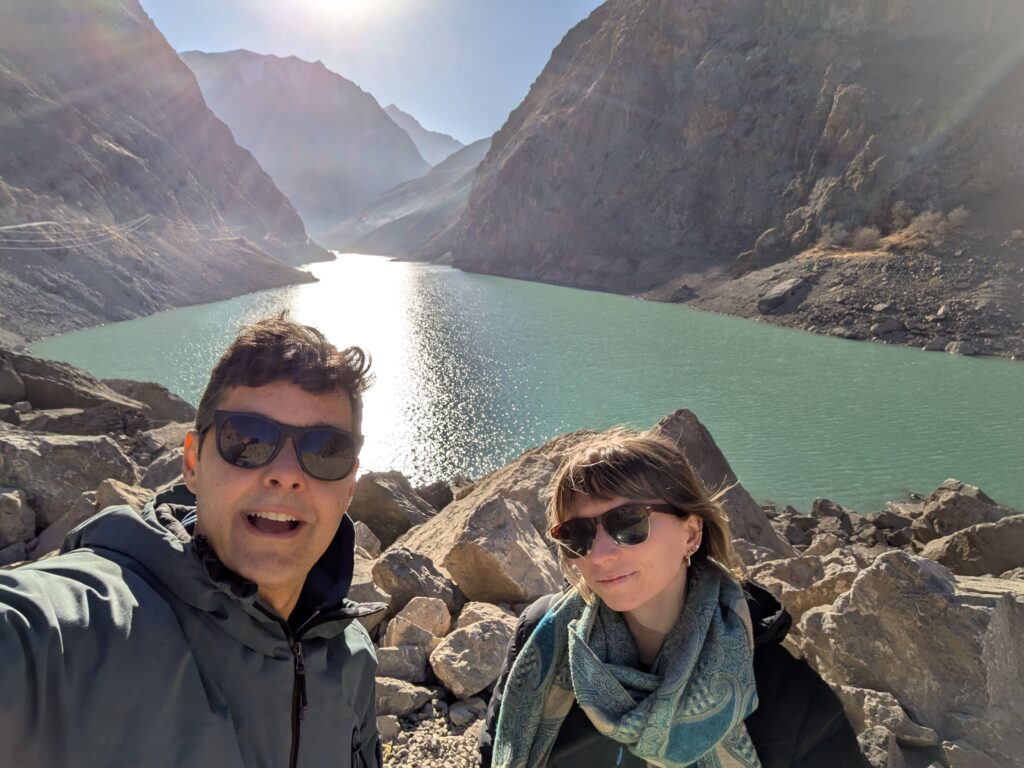
Then, we see Hushyor (sometimes called Soya). The gasp in the car is audible. No photo, no description, can prepare you for that blue. It is a turquoise so vivid, so pure, it seems to generate its own light, like a slice of tropical ocean misplaced in the high desert.
It defies logic, a perfect illusion painted by nature. We sit by its shore for a long time, saying little, just letting the color saturate our vision.

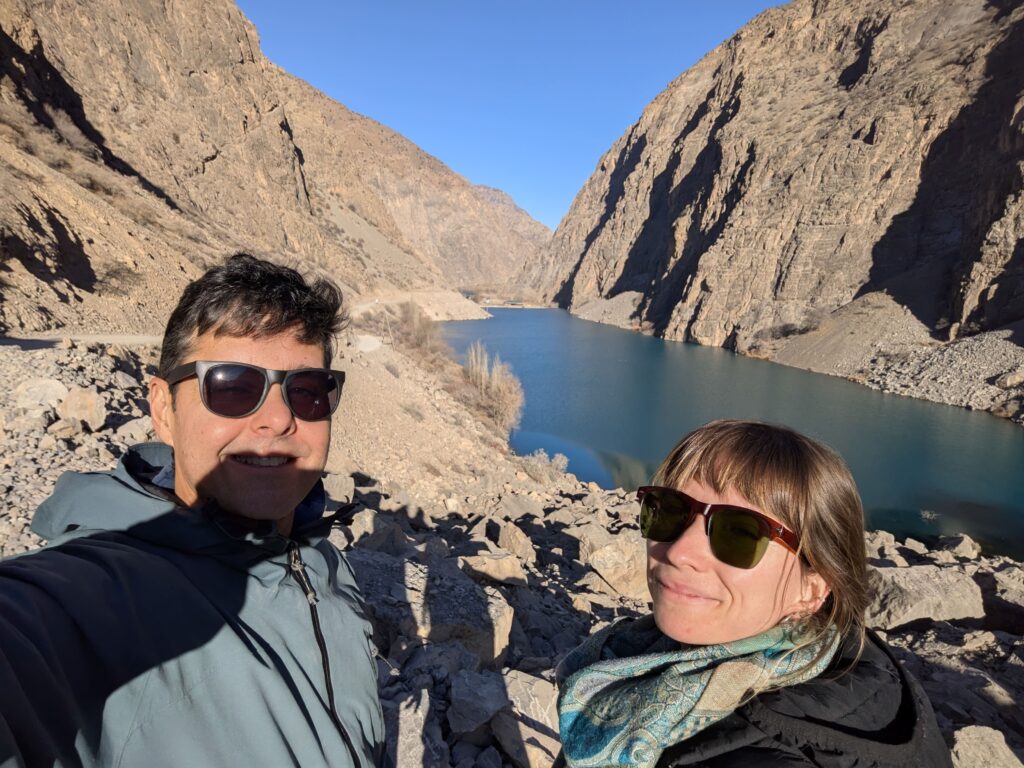
The journey becomes a pilgrimage of color and character. Nophin requires a glance back, a shy emerald-green pool cradled by cliffs. Kholid is a deeper, more solemn navy.
At each, our guide shares a snippet—a local legend about star-crossed lovers, the practicalities of trout fishing, the meaning of a name. He isn’t just a driver; he’s a translator of the landscape.
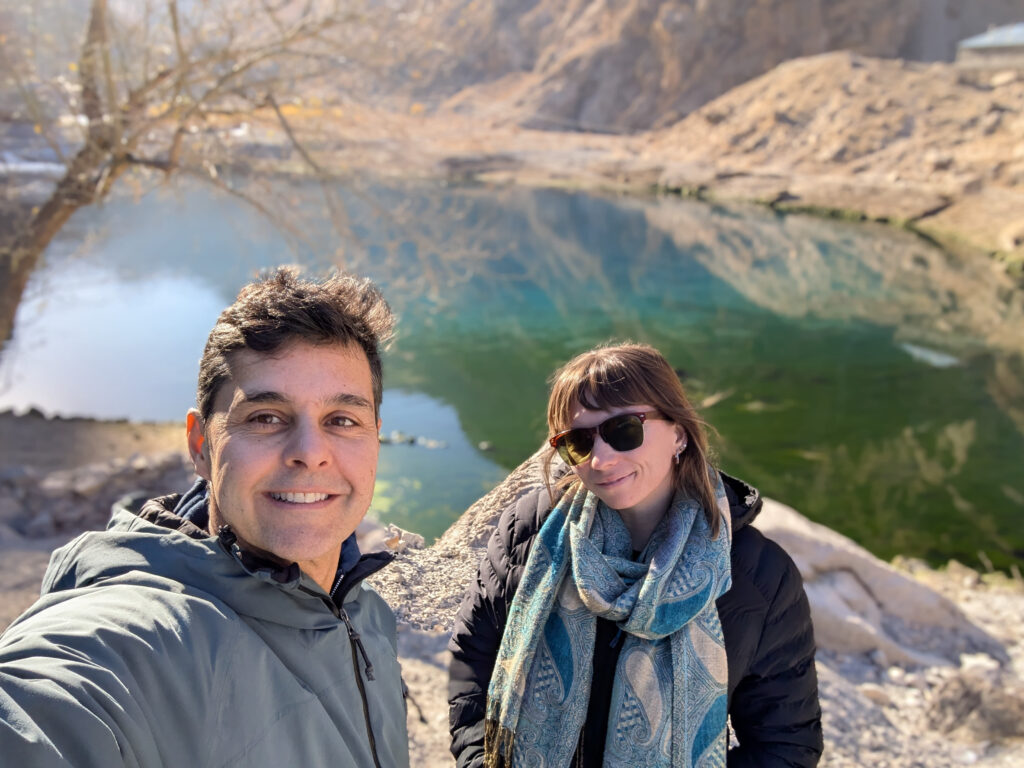
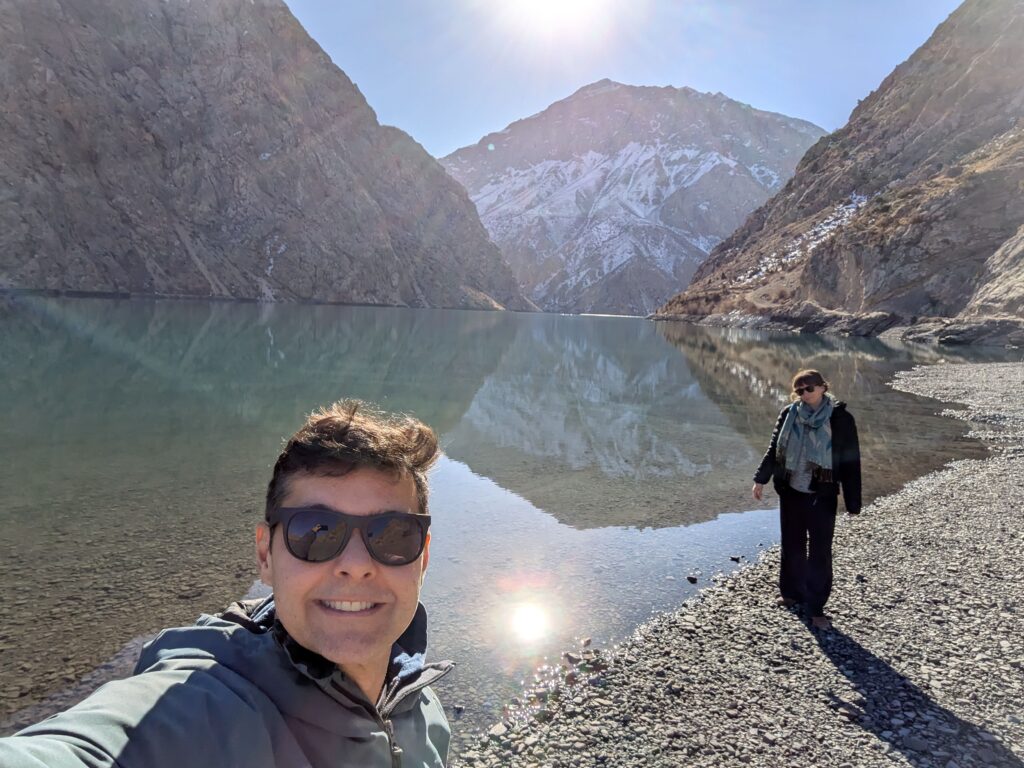
The higher we go, the more profound the silence becomes. At Marguzor, the largest and often considered the crown jewel, we walk away from the vehicle, the crunch of our boots the only sound.
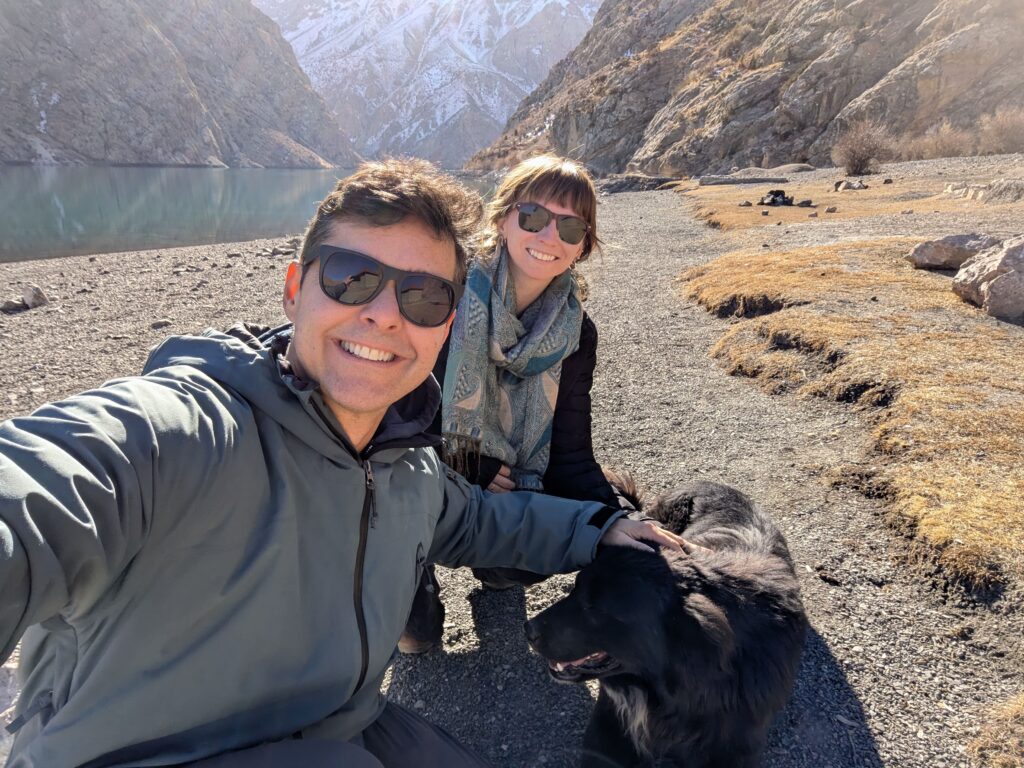
The lake is a vast, mesmerizing canvas of shifting blues and greens, mirroring the snowy peaks at its head. The silence here is not an absence; it’s a presence. It’s the sound of geological time, of glaciers carving, of water patiently wearing down stone. It is, I realize, the perfect antidote to a noisy world. This shared, wordless awe with my companion was the core of the experiential gift — a memory forged in pure, unadulterated wonder.

Part II: From Geological to Human Time – The Dust of Sarazm
Descending in the late afternoon, our minds still swimming in shades of blue, the transition is deliberate. We leave the vehicle at the edge of a vast, sun-bleached plain. Before us lies Sarazm. The name means “where the land begins,” and standing here, you believe it.
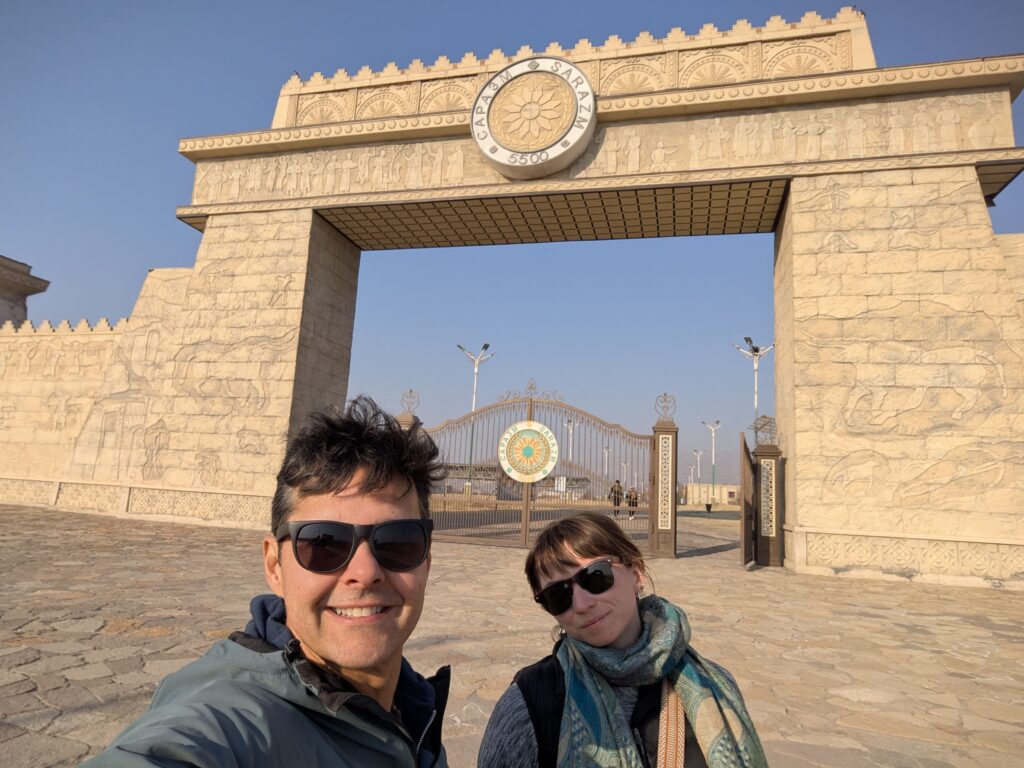
After the liquid, vertical drama of the lakes, Sarazm is horizontal, austere, and dry. Designated a UNESCO World Heritage site as one of the oldest settlements in Central Asia (inhabited from 3500 BCE to 1800 BCE), it feels less like a ruin and more like an open-air archive. We walk along low, exposed stone walls marking the outlines of homes, temples, and workshops.
“This was a major metallurgical center,” our Guide says, pointing to an area where archaeologists found slag and furnaces. “They worked with copper, tin, and even precious metals. Traders from the steppes, from Mesopotamia, would come here.”
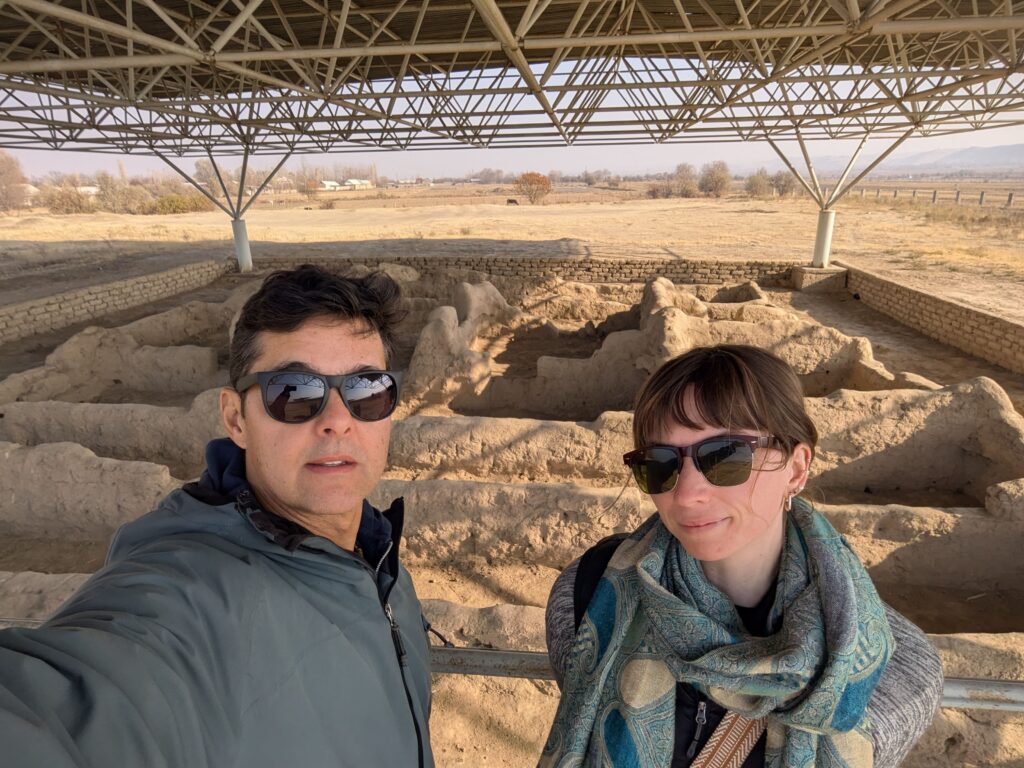
I bend down, touching the sun-warmed stone. The connection is electric. Just hours before, we were in a landscape shaped by inhuman forces. Here, in this dust, is evidence of humanity’s first ambitious strokes in this very valley—craftsmen, farmers, traders on a proto-Silk Road.
We see the remains of a “fire temple” and intricately reconstructed burial sites, their inhabitants surrounded by fine ceramics and jewelry.
The contrast is the lesson. The lakes are nature’s sublime, unchanging masterpiece. Sarazm is the story of human ingenuity, aspiration, and community in the face of that immense nature. It provides a breathtaking context.
The people of Sarazm looked up at these same, daunting mountains we just traversed; they drew water from the same river system that feeds the lakes. They built a civilization here.
Walking through Sarazm, the majestic Fanns in the distance no longer feel just like a scenic backdrop, but like a defining character in the long human story of this place. It transformed our view from passive scenery to an inhabited, storied landscape.
Part III: The Living Tapestry – Panjakent Bazar
As the golden hour light softened the day, we returned to the outskirts of Panjakent, our final stop: the Panjakent Bazar. If Sarazm is the skeletal remains of ancient commerce, the bazar is its vibrant, breathing descendant.
The sensory shift is joyous and immediate. The quiet of the mountains and the solemnity of the ruins are swept away in a wave of sound, color, and scent. It is a symphony of life.
The air is thick and fragrant—the earthy smell of potatoes and onions, the sweet perfume of overripe apricots and melons, the sharp tang of fresh dill and coriander, and the constant, comforting aroma of non, the round, stamped Tajik bread, baking in tandoor ovens.
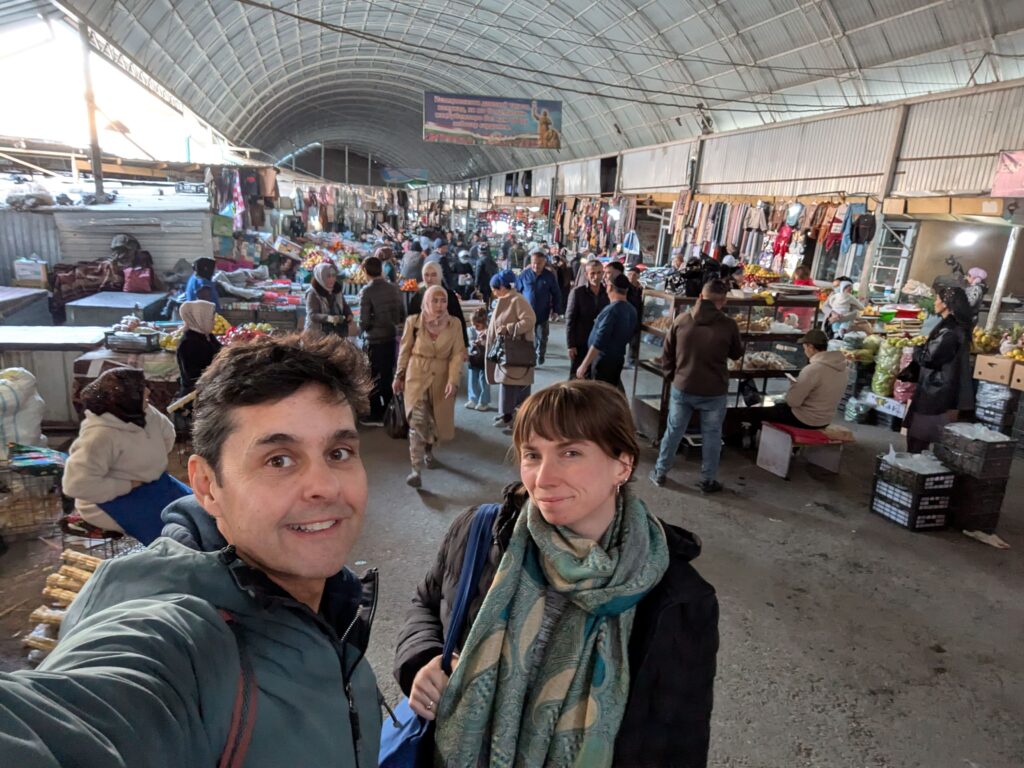
We dive into the lanes. It’s a kaleidoscope of texture and hue: mountains of almonds, walnuts, and raisins glistening like jewels; sacks of crimson sumac and golden turmeric; stacks of vibrantly striped, traditional atlas and adras fabrics in dazzling pinks, purples, and greens.
Butchers deftly work in the open air; old men in worn suits sell neatly arranged screws and buttons; women in bright dresses examine bolts of cloth.
This is where the Silk Road narrative, so often relegated to history books, becomes undeniably alive. The bartering, the exchange, the movement of goods from farm to table, from loom to body—it’s the same essential human dance witnessed at Sarazm, just with modern costumes. We are no longer observers of history; we are participants in its ongoing flow. We buy a bag of sweet, dried mulberries and a sack of walnuts for the journey, our few somoni contributing to this ancient economy.
A vendor, seeing our interest, offers a slice of a honeydew melon so sweet it tastes like sunshine. The transaction is simple, but the smile that accompanies it is a thread of connection.
Reflection: The Arc of a Perfect Day
Sitting that evening, pleasantly exhausted, with a cup of strong Tajik tea, the day’s arc felt beautifully, intentionally crafted.
- The Natural Sublime (The Lakes): It awakened our senses with awe. It was the emotional and visual high, a reminder of the planet’s raw, beautiful power.
- The Historical Anchor (Sarazm): It provided profound context. It rooted the natural beauty in human history, transforming scenery into a homeland.
- The Cultural Present (The Bazar): It connected us to the living, breathing present. It was an immersion into the daily rhythms that have grown from that deep history.
This seamless flow—from nature’s masterpiece, to ancient human endeavor, to contemporary life—is what elevated the trip from a simple sightseeing tour to a deeply understanding experience. It wasn’t a checklist; it was a story.
The Gift of Effortless Experience
This brings me to the practical magic that made it all possible. In seeking to gift an experience, I wanted it to be flawless, immersive, and free of logistical headaches.
Booking through Viator provided exactly that. It wasn’t just about securing a car and a driver. It was about:
- Curated Expertise: We weren’t just driven; we were guided by our guide. His knowledge bridged the gaps—explaining the science behind the lakes’ colors, the history of Sarazm, and the nuances of the bazar. He knew when to talk and when to let the silence speak.
- Seamless Logistics: The timing was perfect. We hit the lakes in the best light, Sarazm when the heat was waning, and the bazar at its lively peak. Transitions were smooth, allowing us to stay immersed in the experience.
- The Freedom of Presence: With transport, guidance, and a clear itinerary handled, our mental energy was freed. We could devote ourselves entirely to feeling, tasting, and absorbing, rather than navigating, haggling, or planning.
We returned to our guesthouse as the stars emerged over Panjakent, our clothes smelling of mountain dust and market spices. Our souvenirs were not trinkets, but sensory memories: the chill of the lake air, the texture of 5,000-year-old stone, the taste of a gifted melon, the spectrum of blue forever etched in our minds.
This tour was more than a day trip; it was a narrative journey through the very soul of the Zarafshan Valley. It proved that the most meaningful gifts aren’t wrapped in paper, but in experience—a shared story of turquoise lakes, ancient dust, and living color, effortlessly delivered and forever remembered.