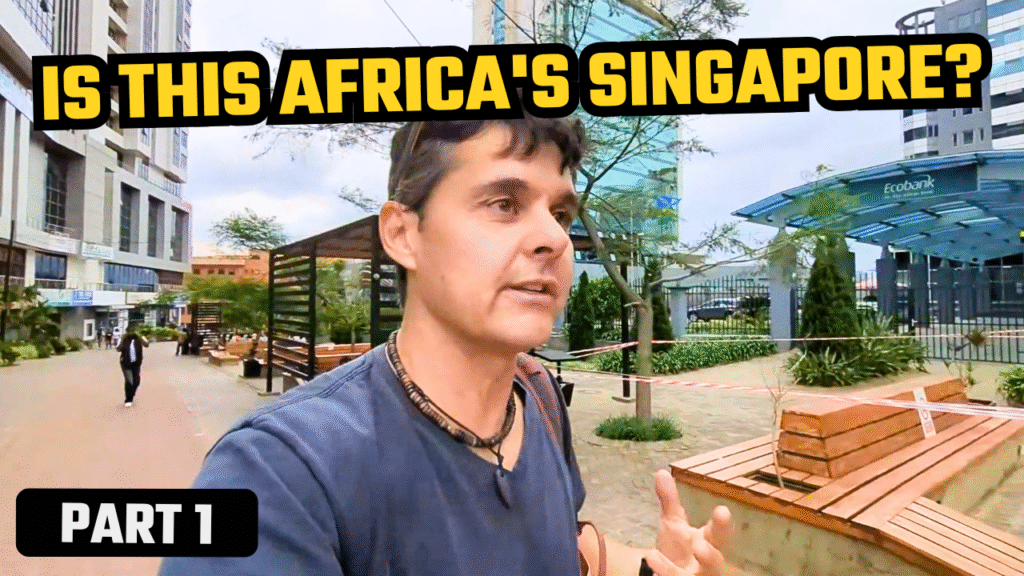
Can you imagine traveling to a place that managed to rebuild itself from scratch and transform into one of the safest, most modern, and most surprising nations on the African continent? During my recent journey through East Africa, I arrived in Rwanda, a country dubbed by many travelers and experts as the “Singapore of Africa.”
I must admit that before crossing the border, I had some reservations about what I would find. Many tourists still associate Rwanda solely with the tragic 1994 genocide, when nearly 1 million people lost their lives in a short period. However, what I witnessed with my own eyes was a completely transformed country. Today, Rwanda is truly an “Africa for beginners”: a clean, safe, and organized destination that fascinatingly blends profound historical lessons with breathtaking scenery.
If you want to understand what it’s like to explore the “Land of a Thousand Hills” independently, on a budget, while soaking in the best of cultural and historical tourism, I have put together this definitive guide packed with reflections, insights, and practical tips for your trip.
Or watch my full experience:
Kigali: Discovering the Modern and Surprising Capital
Upon arriving in Kigali, the capital of Rwanda, the first thing that catches your attention is its organization and cleanliness. The hilly topography filled with rolling green landscapes perfectly explains why the country is known worldwide as the Land of a Thousand Hills.
Mobility and Urban Life
Walking around Kigali is incredibly pleasant and offers a sense of security that, unfortunately, few capital cities around the world can match. In the city center, you will find a Free Zone (a car-free pedestrian area), perfect for strolling leisurely, accessing free Wi-Fi, and watching local daily life unfold.
To get around the city like a local, the best tip is to use motorbikes. It is the fastest, most efficient, and cheapest way to travel in Kigali. In fact, the city already features fleets of electric motorbikes, which produce zero noise and help keep the air clean.
Local Culture and Food
If you enjoy the local art scene, do not miss the Niyo Arts Center, a fantastic gallery filled with paintings and artwork created by local artists.
When hunger strikes, head over to the Nyamirambo neighborhood (known for its vibrant culture and large Muslim community). This area is packed with local eateries where you can taste traditional Beef Pilau (a delicious spiced rice dish with meat) while watching local football matches broadcast on big screens along the streets. Be sure to also try the acclaimed Rwandan coffee at one of the local cafés.
The Dark Side of History: Dark Tourism and Genocide Memorials
There is no way to understand present-day Rwanda without looking at the scars of its past. In 1994, ethnic conflicts fueled by the remnants of Belgian colonial rule led to the brutal massacre of over 1 million Tutsis and moderate Hutus. Visiting the sites dedicated to this memory—known as Dark Tourism—is not about morbid curiosity, but rather a necessary experience to learn from humanity’s worst mistakes and to appreciate the resilience of its people.
1. Kigali Genocide Memorial
Located right in the capital, this is a mandatory starting point. The site serves as both a museum and a final resting place for thousands of victims. The exhibits clearly explain the geopolitical origins of the conflict, the role of colonial divisions (such as ethnic identity cards), and how international inaction escalated the tragedy.
2. Memorial to the 10 Belgian Peacekeepers
Situated on the former grounds of the military barracks in Kigali, this museum honors ten Belgian UN peacekeepers who were surrounded and killed while attempting to protect the moderate Prime Minister. In the room where the soldiers made their last stand, bullet holes and grenade blast marks are still preserved on the walls. The tribute features ten stone pillars arranged in a circle, symbolizing the unity and mutual defense of the officers.
3. Nyamata and Ntarama Genocide Memorials
Located in the Bugesera district outside Kigali, these two memorials (recognized as UNESCO World Heritage sites) offer a raw look at what transpired inside local churches. In 1994, thousands of civilians sought refuge in these sanctuaries believing they would be safe. Sadly, they were deceived by invading forces who surrounded the buildings and carried out terrible massacres. Inside the preserved churches, you can still see bullet holes, grenade-shattered roofs, and the clothing of the victims. It is a deeply moving, poignant, and unforgettable visit.
How to Visit the Memorials Independently on Your Own
Many agencies charge high prices for private tours to the memorials outside the capital. However, you can easily do this itinerary for a fraction of the cost by using local public transport.
- Taking the bus to Nyamata: In Kigali, head to the central bus station (Bus Park) and catch a public van or minibus heading to Nyamata. The ticket costs around 500 Rwandan Francs (a fraction of a taxi fare), and the journey takes about 30 to 40 minutes.
- Arriving at Nyamata Memorial: The bus route passes very close to the memorial. Ask the driver to drop you off near the location on Google Maps to avoid walking 15 minutes from the bus terminal.
- Heading to Ntarama: After visiting the Nyamata Memorial, you can take a quick motorbike taxi to Ntarama or hop on the return bus toward Kigali and get off at the access road for Ntarama Memorial.
- Local Guides at the Sites: You do not need to hire a private tour guide in the city. At each memorial, local resident guides provide detailed explanations about the history and context of the events.
How Rwanda Transformed into the “Singapore of Africa”
Following the 1994 tragedy, the country implemented deep reconciliation measures. One of the most significant changes was banning identity-based politics: today, it is illegal to classify people by ethnicity (Tutsi or Hutu). The overarching message is clear: everyone is Rwandan.
Alongside national unity, the government invested heavily in modernization, safety, and technology. Crime rates dropped dramatically, power grid reliability improved significantly compared to neighboring countries like Burundi and Tanzania, and major infrastructure projects continue to rise—including a new international airport near Kigali designed to turn the country into an aviation hub for East Africa.
Tourism has become a key pillar of this economic engine, contributing around 40% of the nation’s GDP. Rwanda invests heavily in global marketing (such as the Visit Rwanda campaign, which sponsors major European football clubs like Paris Saint-Germain) for attractions beyond its history, including famous mountain gorilla safaris, chimpanzee trekking, and wildlife observation in its national parks.
Practical Tips for Your Trip to Rwanda
- Safety on the Streets: Rwanda is extremely safe to walk around. You can walk at night through well-lit alleys without the safety concerns typical of many other global capitals.
- Streamlined Visa: Rwanda is part of the East African Community. You can apply for the East Africa Tourist Visa, a single joint visa that allows travel across Rwanda, Uganda, and Kenya.
- Money and ATMs: Even in smaller towns like Nyamata, you will easily find ATMs to withdraw local currency (Rwandan Franc).
- Respect at Memorials: Because these are sites of remembrance and mourning, keep your voice low and strictly respect rules prohibiting photography or filming inside designated indoor areas.
Traveling to Rwanda is a profound lesson in geopolitics, resilience, and humanity. It shows firsthand how a nation can rise from its darkest hour, rebuild itself, and become an inspiring example for the world.