If there is one place that defines the resilience and cultural richness of Afghanistan, it is Bamiyan. Located at an altitude of 2,500 meters (8,200 feet) and surrounded by the Hindu Kush mountains, this region was once a crucial point on the Silk Road and a vibrant center of Buddhism.
My journey there was one of the most profound experiences I’ve ever had. While the world knows Bamiyan for the tragic destruction of its giant Buddhas, the region offers much more than just ruins. Here is what you cannot miss when you visit. Or watch my full video about Bamian:
1. The Site of the Buddhas of Bamiyan
Although the gargantuan statues were destroyed in 2001, visiting the empty niches is mandatory.
- What to see: You will see the immense hollows in the rock where the “Great Buddha” (55m) and the “Smaller Buddha” (38m) once stood. You can walk right up to the base of the statues and observe the fragments of stone that remain.
- Highlight: The site is surrounded by hundreds of man-made caves that served as monasteries and sanctuaries for Buddhist monks. Some still preserve faint traces of mural paintings from centuries ago.
2. Shahr-e Gholghola: The City of Screams
This 13th-century Islamic citadel offers one of the most breathtaking views of the entire valley.
- History: The name “City of Screams” refers to the massacre ordered by Genghis Khan. Today, the ruins are being preserved with support from UNESCO.
- Travel Tip: Climb to the top of the ruins for a 360° panoramic view of the new city of Bamiyan, the snow-capped mountains, and the Buddha niches in the distance.
3. Band-e-Amir National Park
Often called the “Grand Canyon of Afghanistan,” this was the country’s first national park and is a true oasis.
- What to do: Explore the six deep-blue lakes with crystal-clear waters (such as Band-e-Haibat). The contrast between the blue water and the surrounding red cliffs is surreal.
- Local Experience: You can ride a swan-shaped paddleboat and watch the natural waterfalls that form between the lakes. It is one of the few places where you will see Afghan families relaxing and enjoying nature.
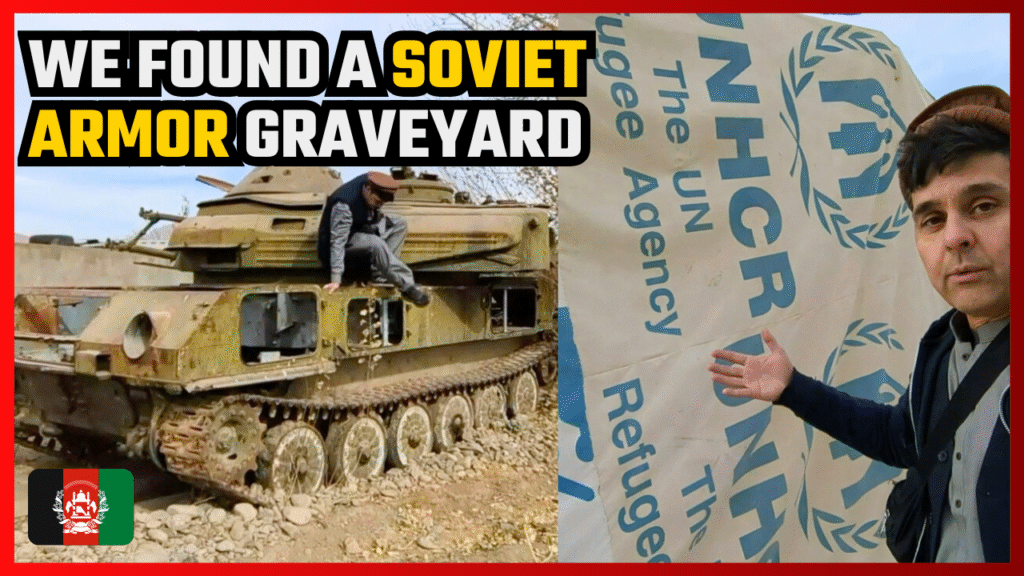
4. The “Museum” of Soviet Armored Vehicles
For fans of military history and geopolitics, the outskirts of Bamiyan hold relics from the Soviet occupation.
- What to see: In open fields, it is common to find T-55 tanks, armored personnel carriers, and anti-aircraft guns left behind. It is a unique opportunity to touch the Cold War history that shaped modern Afghanistan.
5. Shahr-e Zohak (The Red City)
Located at the entrance of the Bamiyan Valley, this fortress made of reddish mud-brick defended the region for over a thousand years.
- What to expect: In addition to the impressive mud architecture, the site still houses old artillery positions and cannons used in more recent conflicts, showing how ancient sites remain strategically relevant.
Practical Tips for the Traveler
- Geopolitics and Safety: Road safety has improved, allowing for night travel that was previously impossible, but checkpoints are frequent. Always keep your documents and travel permits (permits) handy.
- Culture and Dress Code: Bamiyan is considered one of the most progressive regions in the country. In the local market, you will see women working and even mixed groups of local tourists, which is rare in Kabul.
- Infrastructure: The city is not connected to the national power grid. Most hotels and houses run on solar energy and generators. Prepare for quick showers and bring a high-capacity power bank.
- Gastronomy: Be sure to try the Palau (rice with meat and spices) and Afghan tea. Hospitality is taken seriously: if you’re lucky, you might even be gifted fresh apples picked from the local orchards.